
10 Best CPD Tankmates | Best Fish for Nano Tank India
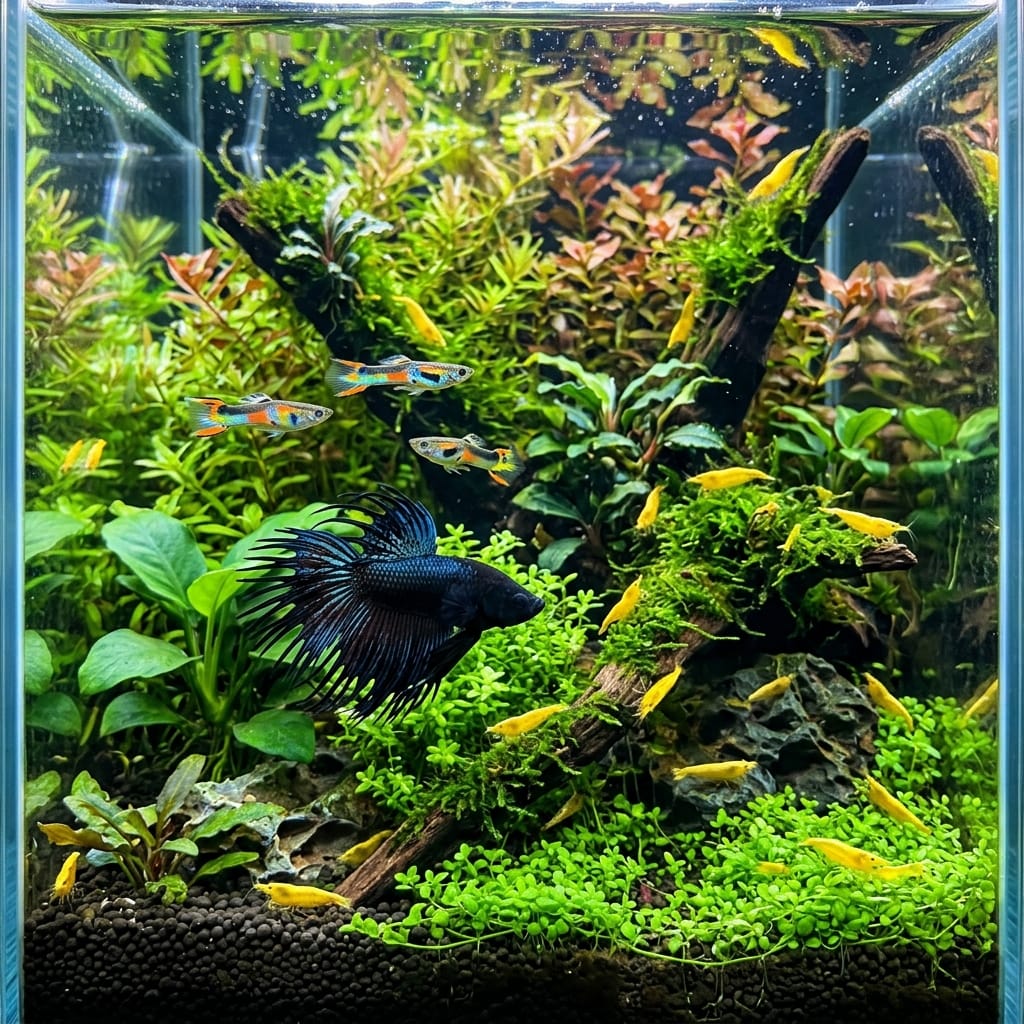
The Celestial Pearl Danio (Celestichthys margaritatus), lovingly called the “Galaxy Rasbora” by hobbyists across the globe, has taken the Indian aquascaping community by storm. With their iridescent dark blue bodies dotted with golden star-like spots and vivid orange-red fins, these gems bring high-end jewel-toned elegance to any desktop aquarium.
However, keeping CPDs in a small tank comes with a distinct challenge: they are remarkably shy and tiny. Growing to a maximum size of just 2 to 2.5 cm, these micro-fish can easily be intimidated, outcompeted for food, or even swallowed by larger freshwater species.
If you are curating the best fish for nano tank setups in India, you need species that thrive in similar water conditions, respect their timid nature, and fit comfortably within the constraints of smaller aquariums (such as 30-liter to 60-liter tanks).
In this comprehensive guide, we will break down the ideal tankmates, parameter matching, dither fish concepts, and specific care strategies tailored for Indian home aquariums.
Understanding Celestial Pearl Danio Behavior and Needs
Before selecting companions, it is crucial to understand what makes CPDs tick in a nano aquarium environment:
- Timid & Shy Nature: CPDs are naturally skittish. In a species-only tank without active surrounding fish, they often spend hours hidden inside dense plant foliage.
- Aggression Level: Highly peaceful toward other species. Males engage in playful “sparring” among themselves, flaring their brilliant red fins, but they cause no physical harm to each other or other tank inhabitants.
- Water Parameters: They prefer slightly soft to moderately hard water (pH 6.5 – 7.5, GH 5 – 12 dGH) and temperatures between 20°C and 26°C.
- Swimming Zone: Mid-water to bottom dwellers who like heavily planted habitats with low-to-moderate water flow.
When curating a community nano tank in India, your goal is to select tankmates that serve as dither fish (peaceful surface swimmers that signal to CPDs that no predators are near) or clean-up crew members that stay out of their way.
Before adding new stock, always test your water volume and capacity using our free Aquarium Bioload Calculator.
5 Golden Rules for Choosing CPD Tankmates in India
- Size Is Everything: Never choose a tankmate larger than 3.5 to 4 cm (1.5 inches). Large tetras, adult gouramis, or angelfish will view CPDs as expensive live food.
- Beware of Fast Feeders: CPDs are slow, deliberate eaters. Fast-swimming, aggressive feeders like Zebra Danios or Tiger Barbs will eat all the food before your CPDs get a bite.
- Account for Indian Summer Temperatures: While CPDs can tolerate temperatures up to 26°C–27°C, sustained temperatures above 28°C during peak Indian summers (April to June) stress them out. Choose tankmates that also prefer cooler to moderate tropical temperatures.
- Provide Dense Plant Cover: Tankmates work best when the aquarium is heavily aquascaped with live mosses like Java Moss, stem plants, and driftwood to break line of sight and reduce stress.
- Keep Schooling Numbers Balanced: Nano fish thrive in groups. Ensure your tank size allows for proper school sizes (at least 6–8 of each schooling species) without overstocking.
10 Best Celestial Pearl Danio Tankmates for Nano Tanks in India
Here are the absolute best community partners for your Galaxy Rasboras, thoroughly tested for nano aquariums under Indian climate conditions.
1. Chili Rasbora (Boraras brigittae)
Care Level: Easy | Size: 1.5 - 2 cm | Tank Zone: Top to Mid-waterThe Chili Rasbora is perhaps the ultimate nano companion for Celestial Pearl Danios. Native to South East Asia, these tiny, ruby-red micro-rasboras share the exact same tiny scale and gentle disposition as CPDs.
Because Chili Rasboras tend to hover near the top and upper-middle sections of the tank, their bold orange-red coloration acts as a natural signal to timid CPDs. Seeing Chili Rasboras swimming openly encourages your CPDs to venture out from dense vegetation. In soft to moderately neutral Indian tap water, both species display incredible color contrast—deep red against galaxy blue.
- Why they work: Identical size, peaceful temperament, vibrant color contrast, excellent dither fish.
- Pro-Tip for India: Ensure your filter intake has a pre-filter sponge; both Chili Rasboras and CPDs can easily be pulled into open filter tubes.
2. Ember Tetra (Hyphessobrycon amandae)
Care Level: Easy | Size: 2 cm | Tank Zone: Mid-waterIf you want a hardy, school-oriented fish that handles varying water parameters across different Indian cities, the Ember Tetra is an outstanding choice. These neon-orange characins remain tiny and stay tightly grouped as they glide through the planted aquascape.
Embers are remarkably peaceful, slow-swimming, and unfazed by other fish. Their bright fiery hue creates a breathtaking visual display when mixed with the spotted pattern of CPDs. Because Ember Tetras eat tiny micro-pellets and crushed flakes, feeding time with CPDs is straightforward and conflict-free.
- Why they work: Extremely hardy, tight schooling behavior, non-aggressive feeders.
- Compatibility Rating: 10/10 for nano setups above 30 liters.
3. Pygmy Corydoras (Corydoras pygmaeus)
Care Level: Easy to Moderate | Size: 2.5 cm | Tank Zone: Bottom to Mid-waterMost Corydoras species are too large for a 30-liter nano tank, but the adorable Pygmy Corydoras is a rare exception. Unlike typical bottom-dwelling catfish, Pygmy Corys actively swim in the mid-water column alongside your CPDs while also cleaning up uneaten food from the substrate.
Pygmy Corys are extraordinarily gentle and will never harass CPDs or shrimp. They spend their day sifting through fine sand substrate and resting gracefully on plant leaves.
- Why they work: Occupies the lower layers, scavenges leftover micro-pellets, completely peaceful.
- Substrate Note: Always use smooth, fine silica sand or soft aqua-soil to protect their delicate barbels.
4. Red Cherry Shrimp (Neocaridina davidi)
Care Level: Very Easy | Size: 2.5 - 3 cm | Tank Zone: Substrate / PlantsNo nano tank in India is complete without dwarf freshwater shrimp, and the Red Cherry Shrimp is the undisputed king of utility and color.
CPDs and Cherry Shrimp make an iconic pairing. Adult Red Cherry Shrimp are far too large for a CPD to eat, and they spend all day grazing on biofilm, detritus, and algae from rock surfaces and plant foliage. While adult CPDs might occasionally eat tiny newly hatched shrimplets, providing lush dense mats of Java Moss ensures high shrimp baby survival rates.
- Why they work: Zero bioload burden, exceptional algae control, gorgeous visual appeal.
- Water Parameter Match: Neocaridina shrimp adapt effortlessly to standard hard tap water found in metros like Delhi, Mumbai, and Bengaluru.
5. Amano Shrimp (Caridina multidentata)
Care Level: Very Easy | Size: 4 - 5 cm | Tank Zone: All Tank LevelsIf you are dealing with stubborn hair algae or brush algae in your high-light aquascape, look no further than the Amano Shrimp.
Amano Shrimp are significantly larger than Cherry Shrimp and possess a voracious appetite for unwanted algae. They are completely peaceful toward fish, including timid CPDs. Because Amano Shrimp cannot reproduce successfully in freshwater (their larvae require brackish water), you never have to worry about overpopulation in a tiny nano aquarium.
- Why they work: World-class algae cleaner, impossible for adult CPDs to bother, highly active.
- Pro-Tip: Keep your tank covered with a tight lid; Amanos are known to climb out if water parameters fluctuate!
6. Nerite Snail (Vittina natalensis)
Care Level: Very Easy | Size: 2 cm | Tank Zone: Glass, Hardscape, SubstrateFor absolute zero-conflict tankmates that keep your nano aquarium glass spotlessly clean, the Nerite Snail is unmatched. Available in attractive patterns like Zebra, Tiger, and Horned variants, these hard-shelled gastropods spend their entire life scraping green spot algae off glass surfaces, rocks, and driftwood.
Because Nerite snails do not breed in pure freshwater, your tank won’t suffer from pest snail outbreaks. CPDs completely ignore them, making them a stress-free addition to any 20L to 40L nano setup.
- Why they work: Complete safety for CPDs, unbeatable glass cleaning, zero unwanted breeding.
7. Otocinclus Catfish (*Otocinclus---
Understanding Celestial Pearl Danio Behavior and Needs
Before selecting companions, it is crucial to understand what makes CPDs tick in a nano aquarium environment:
- Timid & Shy Nature: CPDs are naturally skittish. In a species-only tank without active surrounding fish, they often spend hours hidden inside dense plant foliage.
- Aggression Level: Highly peaceful toward other species. Males engage in playful “sparring” among themselves, flaring their brilliant red fins, but they cause no physical harm to each other or other tank inhabitants.
- Water Parameters: They prefer slightly soft to moderately hard water (pH 6.5 – 7.5, GH 5 – 12 dGH) and temperatures between 20°C and 26°C.
- Swimming Zone: Mid-water to bottom dwellers who like heavily planted habitats with low-to-moderate water flow.
When curating a community nano tank in India, your goal is to select tankmates that serve as dither fish (peaceful surface swimmers that signal to CPDs that no predators are near) or clean-up crew members that stay out of their way.
Before adding new stock, always test your water volume and capacity using our free Aquarium Bioload Calculator.
5 Golden Rules for Choosing CPD Tankmates in India
- Size Is Everything: Never choose a tankmate larger than 3.5 to 4 cm (1.5 inches). Large tetras, adult gouramis, or angelfish will view CPDs as expensive live food.
- Beware of Fast Feeders: CPDs are slow, deliberate eaters. Fast-swimming, aggressive feeders like Zebra Danios or Tiger Barbs will eat all the food before your CPDs get a bite.
- Account for Indian Summer Temperatures: While CPDs can tolerate temperatures up to 26°C–27°C, sustained temperatures above 28°C during peak Indian summers (April to June) stress them out. Choose tankmates that also prefer cooler to moderate tropical temperatures.
- Provide Dense Plant Cover: Tankmates work best when the aquarium is heavily aquascaped with live mosses like Java Moss, stem plants, and driftwood to break line of sight and reduce stress.
- Keep Schooling Numbers Balanced: Nano fish thrive in groups. Ensure your tank size allows for proper school sizes (at least 6–8 of each schooling species) without overstocking.
10 Best Celestial Pearl Danio Tankmates for Nano Tanks in India
Here are the absolute best community partners for your Galaxy Rasboras, thoroughly tested for nano aquariums under Indian climate conditions.
1. Chili Rasbora (Boraras brigittae)
Care Level: Easy | Size: 1.5 - 2 cm | Tank Zone: Top to Mid-waterThe Chili Rasbora is perhaps the ultimate nano companion for Celestial Pearl Danios. Native to South East Asia, these tiny, ruby-red micro-rasboras share the exact same tiny scale and gentle disposition as CPDs.
Because Chili Rasboras tend to hover near the top and upper-middle sections of the tank, their bold orange-red coloration acts as a natural signal to timid CPDs. Seeing Chili Rasboras swimming openly encourages your CPDs to venture out from dense vegetation. In soft to moderately neutral Indian tap water, both species display incredible color contrast—deep red against galaxy blue.
- Why they work: Identical size, peaceful temperament, vibrant color contrast, excellent dither fish.
- Pro-Tip for India: Ensure your filter intake has a pre-filter sponge; both Chili Rasboras and CPDs can easily be pulled into open filter tubes.
2. Ember Tetra (Hyphessobrycon amandae)
Care Level: Easy | Size: 2 cm | Tank Zone: Mid-waterIf you want a hardy, school-oriented fish that handles varying water parameters across different Indian cities, the Ember Tetra is an outstanding choice. These neon-orange characins remain tiny and stay tightly grouped as they glide through the planted aquascape.
Embers are remarkably peaceful, slow-swimming, and unfazed by other fish. Their bright fiery hue creates a breathtaking visual display when mixed with the spotted pattern of CPDs. Because Ember Tetras eat tiny micro-pellets and crushed flakes, feeding time with CPDs is straightforward and conflict-free.
- Why they work: Extremely hardy, tight schooling behavior, non-aggressive feeders.
- Compatibility Rating: 10/10 for nano setups above 30 liters.
3. Pygmy Corydoras (Corydoras pygmaeus)
Care Level: Easy to Moderate | Size: 2.5 cm | Tank Zone: Bottom to Mid-waterMost Corydoras species are too large for a 30-liter nano tank, but the adorable Pygmy Corydoras is a rare exception. Unlike typical bottom-dwelling catfish, Pygmy Corys actively swim in the mid-water column alongside your CPDs while also cleaning up uneaten food from the substrate.
Pygmy Corys are extraordinarily gentle and will never harass CPDs or shrimp. They spend their day sifting through fine sand substrate and resting gracefully on plant leaves.
- Why they work: Occupies the lower layers, scavenges leftover micro-pellets, completely peaceful.
- Substrate Note: Always use smooth, fine silica sand or soft aqua-soil to protect their delicate barbels.
4. Red Cherry Shrimp (Neocaridina davidi)
Care Level: Very Easy | Size: 2.5 - 3 cm | Tank Zone: Substrate / PlantsNo nano tank in India is complete without dwarf freshwater shrimp, and the Red Cherry Shrimp is the undisputed king of utility and color.
CPDs and Cherry Shrimp make an iconic pairing. Adult Red Cherry Shrimp are far too large for a CPD to eat, and they spend all day grazing on biofilm, detritus, and algae from rock surfaces and plant foliage. While adult CPDs might occasionally eat tiny newly hatched shrimplets, providing lush dense mats of Java Moss ensures high shrimp baby survival rates.
- Why they work: Zero bioload burden, exceptional algae control, gorgeous visual appeal.
- Water Parameter Match: Neocaridina shrimp adapt effortlessly to standard hard tap water found in metros like Delhi, Mumbai, and Bengaluru.
5. Amano Shrimp (Caridina multidentata)
Care Level: Very Easy | Size: 4 - 5 cm | Tank Zone: All Tank LevelsIf you are dealing with stubborn hair algae or brush algae in your high-light aquascape, look no further than the Amano Shrimp.
Amano Shrimp are significantly larger than Cherry Shrimp and possess a voracious appetite for unwanted algae. They are completely peaceful toward fish, including timid CPDs. Because Amano Shrimp cannot reproduce successfully in freshwater (their larvae require brackish water), you never have to worry about overpopulation in a tiny nano aquarium.
- Why they work: World-class algae cleaner, impossible for adult CPDs to bother, highly active.
- Pro-Tip: Keep your tank covered with a tight lid; Amanos are known to climb out if water parameters fluctuate!
6. Nerite Snail (Vittina natalensis)
Care Level: Very Easy | Size: 2 cm | Tank Zone: Glass, Hardscape, SubstrateFor absolute zero-conflict tankmates that keep your nano aquarium glass spotlessly clean, the Nerite Snail is unmatched. Available in attractive patterns like Zebra, Tiger, and Horned variants, these hard-shelled gastropods spend their entire life scraping green spot algae off glass surfaces, rocks, and driftwood.
Because Nerite snails do not breed in pure freshwater, your tank won’t suffer from pest snail outbreaks. CPDs completely ignore them, making them a stress-free addition to any 20L to 40L nano setup.
- Why they work: Complete safety for CPDs, unbeatable glass cleaning, zero unwanted breeding.