
10 Best Shrimp Tank Mates for Red Cherry Shrimp in India
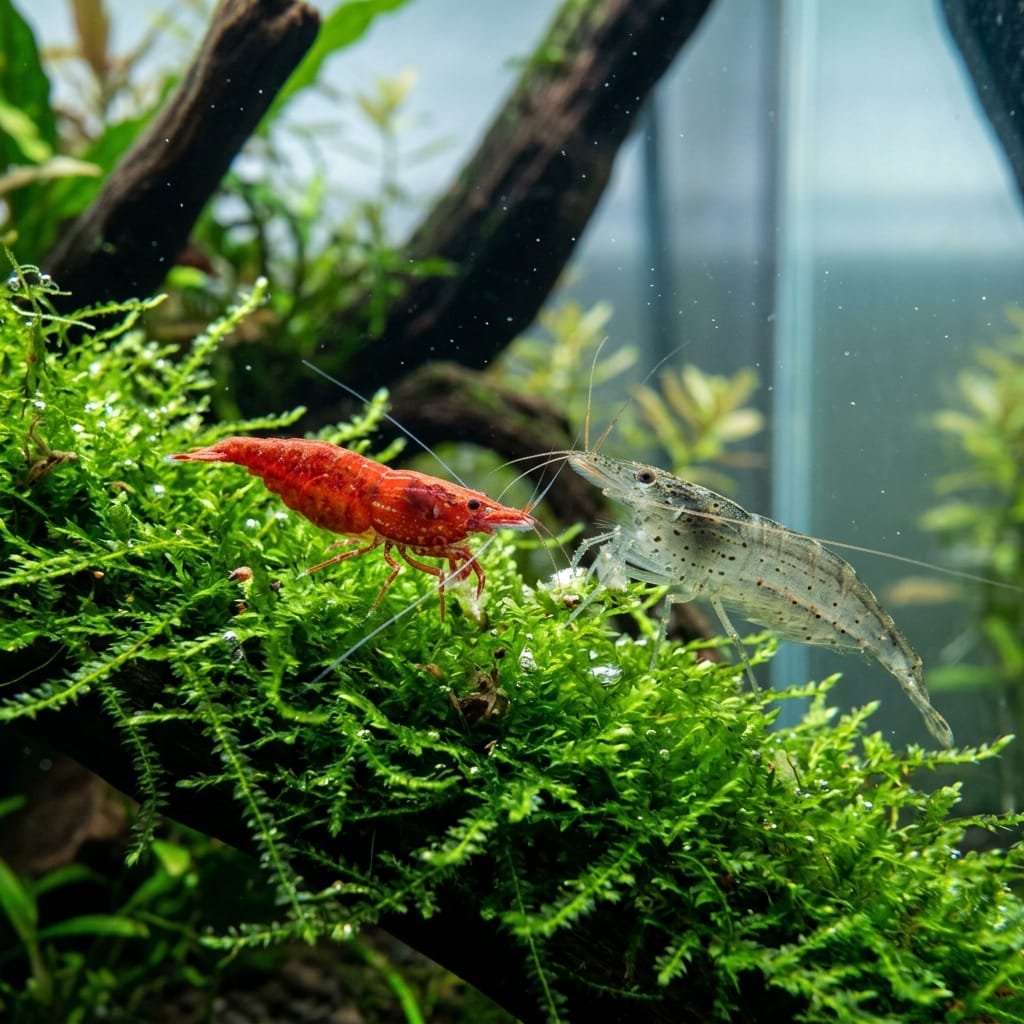
Building a vibrant, peaceful nano aquarium is one of the most rewarding experiences in the Indian fishkeeping hobby. Among all freshwater invertebrates, the Red Cherry Shrimp (Neocaridina davidi) reigns supreme. Their brilliant scarlet coloration, tireless grazing habits, and ease of breeding make them a staple choice for beginner and seasoned aquarists alike.
However, housing Cherry Shrimp in a compact nano setup (typically 10 to 30 liters) comes with a unique challenge: choosing the right shrimp tank mates. Because Cherry Shrimp are small—and their newly hatched shrimplets are tiny—selecting predatory or aggressive tankmates will quickly turn your shrimp colony into an expensive snack.
In this comprehensive guide, we review the best cherry shrimp tank mates in India, focusing on safe fish for nano shrimp tank setups and peaceful community aquarium shrimp companions tailored specifically for Indian tap water conditions.
What Makes an Ideal Tankmate for Red Cherry Shrimp?
Before picking tankmates, you must understand the golden rule of shrimp keeping: If a fish’s mouth is big enough to fit a shrimp, it will eventually eat the shrimp.
To ensure a peaceful community inside a small nano footprint, evaluate potential tankmates using these four key criteria:
- Mouth Size & Temperament: Look for micro-predators or strict herbivores with tiny mouths. Peaceful schooling fish, small bottom feeders, and harmless invertebrates are ideal.
- Nano Tank Compatibility: The companion species must thrive in smaller water volumes without becoming territorial or over-polluting the system.
- Water Parameter Overlap: Indian municipal tap water varies widely—from hard, alkaline water in cities like Mumbai, Delhi, and Bengaluru to softer, acidic water in parts of Kerala and the Northeast. Neocaridina shrimp are hardy and thrive in pH 6.8–7.8, TDS 150–300, and temperatures between 22°C and 28°C. Tankmates should prefer similar conditions.
- Shrimplet Safety: While adult Cherry Shrimp (2–3 cm) are safe around many micro-fish, baby shrimplets (1–2 mm) need extra protection. Dense plantings like Java Moss provide crucial cover.
Always check your stocking density using our free /tools to ensure your bioload stays within safe limits before adding new fauna.
The 10 Best Red Cherry Shrimp Tankmates for Indian Nano Tanks
1. Chili Rasbora (Boraras brigittae)
- Shrimplet Safety Rating: 9.5/10
- Adult Size: 1.5 – 2 cm
- Minimum Tank Size: 15 Liters
- Water Parameters: pH 6.0 – 7.2 | Temp: 24°C – 28°C
The Chili Rasbora is arguably the absolute best fish companion for nano shrimp setups. These tiny, ruby-red micro-rasboras originate from Asian blackwater swamps and stay exceptionally small. Because their mouths are virtually microscopic, even adult shrimplets are generally ignored by a school of Chilis.
In a nano aquarium, a group of 6 to 8 Chili Rasboras creates a stunning visual, matching the intense red hue of your Red Cherry Shrimp. They prefer gentle filter flow, soft to moderate lighting, and plenty of botanical cover.
2. Celestial Pearl Danio (Danio margaritatus)
- Shrimplet Safety Rating: 8/10
- Adult Size: 2 – 2.5 cm
- Minimum Tank Size: 20 Liters
- Water Parameters: pH 6.5 – 7.5 | Temp: 22°C – 26°C
Often referred to by Indian hobbyists as the galaxy rasbora, the Celestial Pearl Danio (CPD) boasts a magnificent deep blue body covered in golden star-like spots and bright orange-red fins.
CPDs are peaceful, mid-to-bottom dwelling micro-predators. While an energetic adult CPD might occasionally chase a newly hatched shrimplet, adult and juvenile Cherry Shrimp are completely safe around them. Providing a lush patch of Java Moss allows young shrimp to hide during their most vulnerable early days.
3. Ember Tetra (Hyphessobrycon amandae)
- Shrimplet Safety Rating: 8.5/10
- Adult Size: 2 cm
- Minimum Tank Size: 20 Liters
- Water Parameters: pH 6.0 – 7.5 | Temp: 23°C – 28°C
If you want a true schooling fish that thrives in warm Indian temperatures, the Ember Tetra is a top candidate. Featuring a fiery translucent orange body, these tiny South American characins stay small and remain very peaceful.
Ember Tetras inhabit the middle layer of the water column, leaving the substrate and plant leaves largely to your Red Cherry Shrimp. They thrive in planted aquariums with soft lighting and drifting live plants.
4. Pygmy Corydoras (Corydoras pygmaeus)
- Shrimplet Safety Rating: 9/10
- Adult Size: 2.5 cm
- Minimum Tank Size: 25 Liters
- Water Parameters: pH 6.2 – 7.5 | Temp: 22°C – 26°C
Unlike standard Corydoras species that stay exclusively on the substrate, the Pygmy Corydoras actively swims through mid-water zones in tight, charming groups.
Pygmy Corys are completely non-aggressive. They spend their time sifting gently through fine sand or resting on aquatic leaves. Their tiny mouths cannot harm adult or juvenile shrimp, making them an ideal bottom-dwelling partner in planted nano setups across India.
5. Amano Shrimp (Caridina multidentata)
- Shrimplet Safety Rating: 10/10
- Adult Size: 4 – 5 cm
- Minimum Tank Size: 15 Liters
- Water Parameters: pH 6.5 – 7.8 | Temp: 20°C – 28°C
Why not keep shrimp with more shrimp? The Amano Shrimp is famous in the aquascaping world for its unmatched appetite for algae—including stubborn hair algae and brush algae that Cherry Shrimp usually ignore.
Because Amano Shrimp belong to the Caridina genus, they will not crossbreed with your Neocaridina Red Cherry Shrimp. This keeps your Cherry Shrimp gene pool pure and bright red while giving you a dedicated clean-up crew that keeps glass and hardscape spotless.
6. Nerite Snail (Vittina natalensis)
- Shrimplet Safety Rating: 10/10
- Adult Size: 2 – 3 cm
- Minimum Tank Size: 10 Liters
- Water Parameters: pH 7.0 – 8.2 | Temp: 22°C – 28°C
The Nerite Snail is a 100% safe, non-violent tankmate for any shrimp aquarium. Featuring striking patterns—ranging from tiger stripes to zebra swirls—Nerites consume film algae, diatom buildup, and organic waste non-stop.
In Indian hard tap water, Nerites thrive because calcium levels support strong shell development. Better yet, Nerite snail eggs cannot hatch in freshwater, preventing population explosions in small nano tanks.
7. Otocinclus Catfish (Otocinclus vittatus)
- Shrimplet Safety Rating: 10/10
- Adult Size: 3.5 – 4 cm
- Minimum Tank Size: 30 Liters
- Water Parameters: pH 6.0 – 7.5 | Temp: 22°C – 27°C
The Otocinclus (or “Oto”) holds a special title in the freshwater hobby: it is one of the only true strict herbivorous fish that will actively ignore live shrimp, including newborns.
Otos spend all day rasping away at green dust algae on glass surfaces, driftwood, and broad plant leaves. If you are focused on maximizing your Cherry Shrimp breeding yield while still keeping a fish in the tank, a small group of Otocinclus is your safest bet.
8. Endler’s Livebearer (Male Only - Poecilia wingei)
- Shrimplet Safety Rating: 7.5/10
- Adult Size: 2 – 2.5 cm (Males)
- Minimum Tank Size: 20 Liters
- Water Parameters: pH 7.0 – 8.0 | Temp: 23°C – 29°C
Endler’s Livebearers feature neon color patterns and active swimming behavior. However, to keep them successfully with Red Cherry Shrimp in a nano tank, keep males only.
Male Endlers stay significantly smaller than females (under 2.5 cm) and lack the mouth size needed to target adult shrimp. While a curious Endler might chase a newly hatched shrimplet, dense plant cover ensures high shrimplet survival rates. They handle warm Indian summer temperatures with ease.
9. Green Neon Tetra (Paracheirodon simulans)
- Shrimplet Safety Rating: 8/10
- Adult Size: 2.5 cm
- Minimum Tank Size: 25 Liters
- Water Parameters: pH 5.5 – 7.2 | Temp: 24°C – 28°C
While classic Neon Tetras can sometimes grow up to 4 cm and display opportunistic hunting habits toward shrimp, the Green Neon Tetra stays much smaller and more slender.
Featuring an intense iridescent blue-green stripe running across its entire body, a small group of Green Neons adds striking color contrast to green plants and bright red shrimp. They are gentle mid-water swimmers that rarely venture into thick carpet plants where shrimplets hide.
10. Hornwort & Mystery Snail Combination
- Shrimplet Safety Rating: 10/10
- Adult Size: Varies
- Minimum Tank Size: 15 Liters
- Water Parameters: pH 7.0 – 8.0 | Temp: 20°C – 28°C
For aquarists who want an invertebrate-only setup, pairing Mystery Snails (Pomacae bridgesii) with fast-growing floating plants like Hornwort creates an ideal bio-balanced nano ecosystem.
Mystery Snails clear uneaten shrimp food pellets and decaying plant material, while their large, colorful shells add movement across the substrate. They cause zero harm to shrimp, and Cherry Shrimp can frequently be seen riding on top of a Mystery Snail’s shell to pick off micro-algae!
Tankmate Compatibility Summary Chart
| Tankmate | Adult Size | Shrimplet Safety | Water Layer | Best For |
|---|---|---|---|---|
| Chili Rasbora | 1.5 - 2 cm | Very High (9.5/10) | Top / Middle | Ultra-nano planted setups |
| Celestial Pearl Danio | 2 - 2.5 cm | High (8/10) | Middle / Bottom | High-end aquascapes |
| Ember Tetra | 2 cm | High (8.5/10) | Middle | Vibrant contrast |
| Pygmy Corydoras | 2.5 cm | High (9/10) | Bottom / Middle | Peaceful sand substrates |
| Amano Shrimp | 4 - 5 cm | Perfect (10/10) | All Layers | Serious algae control |
| Nerite Snail | 2 - 3 cm | Perfect (10/10) | Glass / Hardscape | Diatom & film algae cleanup |
| Otocinclus Catfish | 3.5 - 4 cm | Perfect (10/10) | Glass / Foliage | Safe herbivore community |
| Male Endler’s Livebearer | 2 cm | Moderate (7.5/10) | Top / Middle | Hard water & high temp tanks |
| Green Neon Tetra | 2.5 cm | High (8/10) | Middle | Schooling dynamics |
| Mystery Snail | 4 - 5 cm | Perfect (10/10) | Bottom / Glass | Peaceful invertebrate tanks |
The Vital Role of Moss and Plant Cover in Nano Shrimp Tanks
No matter how peaceful a fish species is, instinct can occasionally lead them to inspect small, moving objects. Newly hatched Red Cherry Shrimplets measure less than 2 millimeters in length—making them look identical to live fish food like brine shrimp or daphnia.
To maximize survival rates and keep your colony growing rapidly, dense moss coverage is mandatory.
       [ Surface Floating Plants: Duckweed / Frogbit ]
                            │
       [ Mid-Water Column: Stem Plants & Ferns ]
                            │
       [ Substrate Level: Dense Java Moss Carpet ]
         └─► Provides Micro-Organisms & Safe Shrimplet Shelter
Why Java Moss is essential:
- Micro-Refuge: The tightly interwoven strands of Java Moss create a sanctuary where fish physically cannot enter.
- Biofilm Production: Moss traps organic particles and harbors rich colonies of micro-organisms (biofilm), which serve as the primary diet for infant Red Cherry Shrimp during their first two weeks of life.
- Water Quality: Fast-growing mosses absorb excess nitrates and ammonium, stabilizing delicate nano water chemistry during hot Indian summer months.
Other beneficial plants for nano shrimp tanks include Christmas Moss, Anubias Nana Petite, BucephaIandra, and floating plants like Amazon Frogbit or Salvinia.
Key Considerations for Nano Tank Management in India
Managing a small aquascape in tropical climates presents distinct operational challenges. Keep these practical tips in mind to ensure long-term success with your shrimp and their tankmates:
1. Temperature Control During Indian Summers
During summer, room temperatures across many parts of North, Central, and Inland India can climb past 35°C. Water temperatures above 29°C deplete dissolved oxygen levels rapidly and cause severe stress for Red Cherry Shrimp and sensitive fish like Celestial Pearl Danio.
- Use small 12V DC aquarium cooling fans pointed across the water surface to lower temperatures by 2°C to 4°C via evaporative cooling.
- Keep tank lids slightly open or open mesh-covered to promote air exchange.
- Top off evaporated water regularly using pure RO water (not hard tap water) to avoid spiking Total Dissolved Solids (TDS).
2. Managing Tap Water Hardness and TDS
Neocaridina shrimp require adequate mineral content (calcium and magnesium) for successful molting, but extreme swings can lead to molting failures (the “white ring of death”).
- Aim for a TDS range between 180 and 250 ppm.
- If your municipal water supply exceeds 400 TDS (common in suburban borewell water), mix borewell water with RO water in a 50:50 ratio during water changes.
- Never execute water changes greater than 15–20% at one time in a nano tank; rapid parameter fluctuations shock delicate shrimplets.
3. Calculating Bioload Limits
In a 20-liter tank, adding 8 fish alongside 15 shrimp pushes filtration limits. Use our online /tools to monitor livestock capacity, filter turnover requirements, and maintenance intervals before making new additions.
Frequently Asked Questions
Can I keep a Betta fish with Red Cherry Shrimp in a nano tank?
Keeping a Betta (Betta splendens) with Red Cherry Shrimp is a risky gamble. Betta temperaments vary significantly; while a very docile Betta might ignore full-grown adult shrimp, many Bettas will actively hunt down and eat both adults and shrimplets in a small nano footprint. If you decide to try, ensure the tank is heavily planted with Java Moss and at least 30 liters in size.
Will Amano Shrimp crossbreed with my Red Cherry Shrimp?
No. Amano Shrimp (Caridina multidentata) and Red Cherry Shrimp (Neocaridina davidi) belong to two completely different biological genera. They cannot crossbreed. You can keep them together without worrying about hybridizing or degrading the color genetics of your Cherry Shrimp colony.
What is the absolute minimum tank size for keeping Cherry Shrimp with micro-fish?
We recommend a minimum volume of 20 Liters (approx. 5 Gallons) for keeping Cherry Shrimp alongside peaceful micro-fish like Chili Rasbora or Ember Tetra. In tanks smaller than 20 liters, water parameters fluctuate too rapidly, and fish territoriality increases due to restricted swimming space.
Why are my Red Cherry Shrimp dying after molting?
Molting issues usually point to improper mineral balance in the water. If the GH (General Hardness) or KH (Carbonate Hardness) is too low, the shrimp cannot build a strong new exoskeleton. If hard water levels or TDS are excessively high, the shell becomes too tough to crack open, trapping the shrimp inside. Maintain a stable TDS of 180–250 ppm and feed high-quality mineral-enriched shrimp foods.
Final Thoughts
Creating a thriving nano tank community featuring Red Cherry Shrimp comes down to careful planning, balanced water parameters, and smart species selection. By choosing peaceful companions like the Chili Rasbora, Pygmy Corydoras, Amano Shrimp, or Nerite Snail, you can build an active, colorful aquarium ecosystem inside your home.
Pair your setup with a thick bed of Java Moss, keep summer temperatures under control, and double-check your tank capacity on our /tools to ensure your mini aquatic world remains healthy and peaceful year-round!---
What Makes an Ideal Tankmate for Red Cherry Shrimp?
Before picking tankmates, you must understand the golden rule of shrimp keeping: If a fish’s mouth is big enough to fit a shrimp, it will eventually eat the shrimp.
To ensure a peaceful community inside a small nano footprint, evaluate potential tankmates using these four key criteria:
- Mouth Size & Temperament: Look for micro-predators or strict herbivores with tiny mouths. Peaceful schooling fish, small bottom feeders, and harmless invertebrates are ideal.
- Nano Tank Compatibility: The companion species must thrive in smaller water volumes without becoming territorial or over-polluting the system.
- Water Parameter Overlap: Indian municipal tap water varies widely—from hard, alkaline water in cities like Mumbai, Delhi, and Bengaluru to softer, acidic water in parts of Kerala and the Northeast. Neocaridina shrimp are hardy and thrive in pH 6.8–7.8, TDS 150–300, and temperatures between 22°C and 28°C. Tankmates should prefer similar conditions.
- Shrimplet Safety: While adult Cherry Shrimp (2–3 cm) are safe around many micro-fish, baby shrimplets (1–2 mm) need extra protection. Dense plantings like Java Moss provide crucial cover.
Always check your stocking density using our free /tools to ensure your bioload stays within safe limits before adding new fauna.
The 10 Best Red Cherry Shrimp Tankmates for Indian Nano Tanks
1. Chili Rasbora (Boraras brigittae)
- Shrimplet Safety Rating: 9.5/10
- Adult Size: 1.5 – 2 cm
- Minimum Tank Size: 15 Liters
- Water Parameters: pH 6.0 – 7.2 | Temp: 24°C – 28°C
The Chili Rasbora is arguably the absolute best fish companion for nano shrimp setups. These tiny, ruby-red micro-rasboras originate from Asian blackwater swamps and stay exceptionally small. Because their mouths are virtually microscopic, even adult shrimplets are generally ignored by a school of Chilis.
In a nano aquarium, a group of 6 to 8 Chili Rasboras creates a stunning visual, matching the intense red hue of your Red Cherry Shrimp. They prefer gentle filter flow, soft to moderate lighting, and plenty of botanical cover.
2. Celestial Pearl Danio (Danio margaritatus)
- Shrimplet Safety Rating: 8/10
- Adult Size: 2 – 2.5 cm
- Minimum Tank Size: 20 Liters
- Water Parameters: pH 6.5 – 7.5 | Temp: 22°C – 26°C
Often referred to by Indian hobbyists as the galaxy rasbora, the Celestial Pearl Danio (CPD) boasts a magnificent deep blue body covered in golden star-like spots and bright orange-red fins.
CPDs are peaceful, mid-to-bottom dwelling micro-predators. While an energetic adult CPD might occasionally chase a newly hatched shrimplet, adult and juvenile Cherry Shrimp are completely safe around them. Providing a lush patch of Java Moss allows young shrimp to hide during their most vulnerable early days.
3. Ember Tetra (Hyphessobrycon amandae)
- Shrimplet Safety Rating: 8.5/10
- Adult Size: 2 cm
- Minimum Tank Size: 20 Liters
- Water Parameters: pH 6.0 – 7.5 | Temp: 23°C – 28°C
If you want a true schooling fish that thrives in warm Indian temperatures, the Ember Tetra is a top candidate. Featuring a fiery translucent orange body, these tiny South American characins stay small and remain very peaceful.
Ember Tetras inhabit the middle layer of the water column, leaving the substrate and plant leaves largely to your Red Cherry Shrimp. They thrive in planted aquariums with soft lighting and drifting live plants.
4. Pygmy Corydoras (Corydoras pygmaeus)
- Shrimplet Safety Rating: 9/10
- Adult Size: 2.5 cm
- Minimum Tank Size: 25 Liters
- Water Parameters: pH 6.2 – 7.5 | Temp: 22°C – 26°C
Unlike standard Corydoras species that stay exclusively on the substrate, the Pygmy Corydoras actively swims through mid-water zones in tight, charming groups.
Pygmy Corys are completely non-aggressive. They spend their time sifting gently through fine sand or resting on aquatic leaves. Their tiny mouths cannot harm adult or juvenile shrimp, making them an ideal bottom-dwelling partner in planted nano setups across India.
5. Amano Shrimp (Caridina multidentata)
- Shrimplet Safety Rating: 10/10
- Adult Size: 4 – 5 cm
- Minimum Tank Size: 15 Liters
- Water Parameters: pH 6.5 – 7.8 | Temp: 20°C – 28°C
Why not keep shrimp with more shrimp? The Amano Shrimp is famous in the aquascaping world for its unmatched appetite for algae—including stubborn hair algae and brush algae that Cherry Shrimp usually ignore.
Because Amano Shrimp belong to the Caridina genus, they will not crossbreed with your Neocaridina Red Cherry Shrimp. This keeps your Cherry Shrimp gene pool pure and bright red while giving you a dedicated clean-up crew that keeps glass and hardscape spotless.
6. Nerite Snail (Vittina natalensis)
- Shrimplet Safety Rating: 10/10
- Adult Size: 2 – 3 cm
- Minimum Tank Size: 10 Liters
- Water Parameters: pH 7.0 – 8.2 | Temp: 22°C – 28°C
The Nerite Snail is a 100% safe, non-violent tankmate for any shrimp aquarium. Featuring striking patterns—ranging from tiger stripes to zebra swirls—Nerites consume film algae, diatom buildup, and organic waste non-stop.
In Indian hard tap water, Nerites thrive because calcium levels support strong shell development. Better yet, Nerite snail eggs cannot hatch in freshwater, preventing population explosions in small nano tanks.
7. Otocinclus Catfish (Otocinclus vittatus)
- Shrimplet Safety Rating: 10/10
- Adult Size: 3.5 – 4 cm
- Minimum Tank Size: 30 Liters
- Water Parameters: pH 6.0 – 7.5 | Temp: 22°C – 27°C
The Otocinclus (or “Oto”) holds a special title in the freshwater hobby: it is one of the only true strict herbivorous fish that will actively ignore live shrimp, including newborns.
Otos spend all day rasping away at green dust algae on glass surfaces, driftwood, and broad plant leaves. If you are focused on maximizing your Cherry Shrimp breeding yield while still keeping a fish in the tank, a small group of Otocinclus is your safest bet.
8. Endler’s Livebearer (Male Only - Poecilia wingei)
- Shrimplet Safety Rating: 7.5/10
- Adult Size: 2 – 2.5 cm (Males)
- Minimum Tank Size: 20 Liters
- Water Parameters: pH 7.0 – 8.0 | Temp: 23°C – 29°C
Endler’s Livebearers feature neon color patterns and active swimming behavior. However, to keep them successfully with Red Cherry Shrimp in a nano tank, keep males only.
Male Endlers stay significantly smaller than females (under 2.5 cm) and lack the mouth size needed to target adult shrimp. While a curious Endler might chase a newly hatched shrimplet, dense plant cover ensures high shrimplet survival rates. They handle warm Indian summer temperatures with ease.
9. Green Neon Tetra (Paracheirodon simulans)
- Shrimplet Safety Rating: 8/10
- Adult Size: 2.5 cm
- Minimum Tank Size: 25 Liters
- Water Parameters: pH 5.5 – 7.2 | Temp: 24°C – 28°C
While classic Neon Tetras can sometimes grow up to 4 cm and display opportunistic hunting habits toward shrimp, the Green Neon Tetra stays much smaller and more slender.
Featuring an intense iridescent blue-green stripe running across its entire body, a small group of Green Neons adds striking color contrast to green plants and bright red shrimp. They are gentle mid-water swimmers that rarely venture into thick carpet plants where shrimplets hide.
10. Hornwort & Mystery Snail Combination
- Shrimplet Safety Rating: 10/10
- Adult Size: Varies
- Minimum Tank Size: 15 Liters
- Water Parameters: pH 7.0 – 8.0 | Temp: 20°C – 28°C
For aquarists who want an invertebrate-only setup, pairing Mystery Snails (Pomacae bridgesii) with fast-growing floating plants like Hornwort creates an ideal bio-balanced nano ecosystem.
Mystery Snails clear uneaten shrimp food pellets and decaying plant material, while their large, colorful shells add movement across the substrate. They cause zero harm to shrimp, and Cherry Shrimp can frequently be seen riding on top of a Mystery Snail’s shell to pick off micro-algae!
Tankmate Compatibility Summary Chart
| Tankmate | Adult Size | Shrimplet Safety | Water Layer | Best For |
|---|---|---|---|---|
| Chili Rasbora | 1.5 - 2 cm | Very High (9.5/10) | Top / Middle | Ultra-nano planted setups |
| Celestial Pearl Danio | 2 - 2.5 cm | High (8/10) | Middle / Bottom | High-end aquascapes |
| Ember Tetra | 2 cm | High (8.5/10) | Middle | Vibrant contrast |
| Pygmy Corydoras | 2.5 cm | High (9/10) | Bottom / Middle | Peaceful sand substrates |
| Amano Shrimp | 4 - 5 cm | Perfect (10/10) | All Layers | Serious algae control |
| Nerite Snail | 2 - 3 cm | Perfect (10/10) | Glass / Hardscape | Diatom & film algae cleanup |
| Otocinclus Catfish | 3.5 - 4 cm | Perfect (10/10) | Glass / Foliage | Safe herbivore community |
| Male Endler’s Livebearer | 2 cm | Moderate (7.5/10) | Top / Middle | Hard water & high temp tanks |
| Green Neon Tetra | 2.5 cm | High (8/10) | Middle | Schooling dynamics |
| Mystery Snail | 4 - 5 cm | Perfect (10/10) | Bottom / Glass | Peaceful invertebrate tanks |
The Vital Role of Moss and Plant Cover in Nano Shrimp Tanks
No matter how peaceful a fish species is, instinct can occasionally lead them to inspect small, moving objects. Newly hatched Red Cherry Shrimplets measure less than 2 millimeters in length—making them look identical to live fish food like brine shrimp or daphnia.
To maximize survival rates and keep your colony growing rapidly, dense moss coverage is mandatory.
       [ Surface Floating Plants: Duckweed / Frogbit ]
                            │
       [ Mid-Water Column: Stem Plants & Ferns ]
                            │
       [ Substrate Level: Dense Java Moss Carpet ]
         └─► Provides Micro-Organisms & Safe Shrimplet Shelter
Why Java Moss is essential:
- Micro-Refuge: The tightly interwoven strands of Java Moss create a sanctuary where fish physically cannot enter.
- Biofilm Production: Moss traps organic particles and harbors rich colonies of micro-organisms (biofilm), which serve as the primary diet for infant Red Cherry Shrimp during their first two weeks of life.
- Water Quality: Fast-growing mosses absorb excess nitrates and ammonium, stabilizing delicate nano water chemistry during hot Indian summer months.
Other beneficial plants for nano shrimp tanks include Christmas Moss, Anubias Nana Petite, BucephaIandra, and floating plants like Amazon Frogbit or Salvinia.
Key Considerations for Nano Tank Management in India
Managing a small aquascape in tropical climates presents distinct operational challenges. Keep these practical tips in mind to ensure long-term success with your shrimp and their tankmates:
1. Temperature Control During Indian Summers
During summer, room temperatures across many parts of North, Central, and Inland India can climb past 35°C. Water temperatures above 29°C deplete dissolved oxygen levels rapidly and cause severe stress for Red Cherry Shrimp and sensitive fish like Celestial Pearl Danio.
- Use small 12V DC aquarium cooling fans pointed across the water surface to lower temperatures by 2°C to 4°C via evaporative cooling.
- Keep tank lids slightly open or open mesh-covered to promote air exchange.
- Top off evaporated water regularly using pure RO water (not hard tap water) to avoid spiking Total Dissolved Solids (TDS).
2. Managing Tap Water Hardness and TDS
Neocaridina shrimp require adequate mineral content (calcium and magnesium) for successful molting, but extreme swings can lead to molting failures (the “white ring of death”).
- Aim for a TDS range between 180 and 250 ppm.
- If your municipal water supply exceeds 400 TDS (common in suburban borewell water), mix borewell water with RO water in a 50:50 ratio during water changes.
- Never execute water changes greater than 15–20% at one time in a nano tank; rapid parameter fluctuations shock delicate shrimplets.
3. Calculating Bioload Limits
In a 20-liter tank, adding 8 fish alongside 15 shrimp pushes filtration limits. Use our online /tools to monitor livestock capacity, filter turnover requirements, and maintenance intervals before making new additions.
Frequently Asked Questions
Can I keep a Betta fish with Red Cherry Shrimp in a nano tank?
Keeping a Betta (Betta splendens) with Red Cherry Shrimp is a risky gamble. Betta temperaments vary significantly; while a very docile Betta might ignore full-grown adult shrimp, many Bettas will actively hunt down and eat both adults and shrimplets in a small nano footprint. If you decide to try, ensure the tank is heavily planted with Java Moss and at least 30 liters in size.
Will Amano Shrimp crossbreed with my Red Cherry Shrimp?
No. Amano Shrimp (Caridina multidentata) and Red Cherry Shrimp (Neocaridina davidi) belong to two completely different biological genera. They cannot crossbreed. You can keep them together without worrying about hybridizing or degrading the color genetics of your Cherry Shrimp colony.
What is the absolute minimum tank size for keeping Cherry Shrimp with micro-fish?
We recommend a minimum volume of 20 Liters (approx. 5 Gallons) for keeping Cherry Shrimp alongside peaceful micro-fish like Chili Rasbora or Ember Tetra. In tanks smaller than 20 liters, water parameters fluctuate too rapidly, and fish territoriality increases due to restricted swimming space.
Why are my Red Cherry Shrimp dying after molting?
Molting issues usually point to improper mineral balance in the water. If the GH (General Hardness) or KH (Carbonate Hardness) is too low, the shrimp cannot build a strong new exoskeleton. If hard water levels or TDS are excessively high, the shell becomes too tough to crack open, trapping the shrimp inside. Maintain a stable TDS of 180–250 ppm and feed high-quality mineral-enriched shrimp foods.
Final Thoughts
Creating a thriving nano tank community featuring Red Cherry Shrimp comes down to careful planning, balanced water parameters, and smart species selection. By choosing peaceful companions like the Chili Rasbora, Pygmy Corydoras, Amano Shrimp, or Nerite Snail, you can build an active, colorful aquarium ecosystem inside your home.
Pair your setup with a thick bed of Java Moss, keep summer temperatures under control, and double-check your tank capacity on our /tools to ensure your mini aquatic world remains healthy and peaceful year-round!