
How to Maintain a Nano Aquarium: Filters, Heaters, and Basic Care
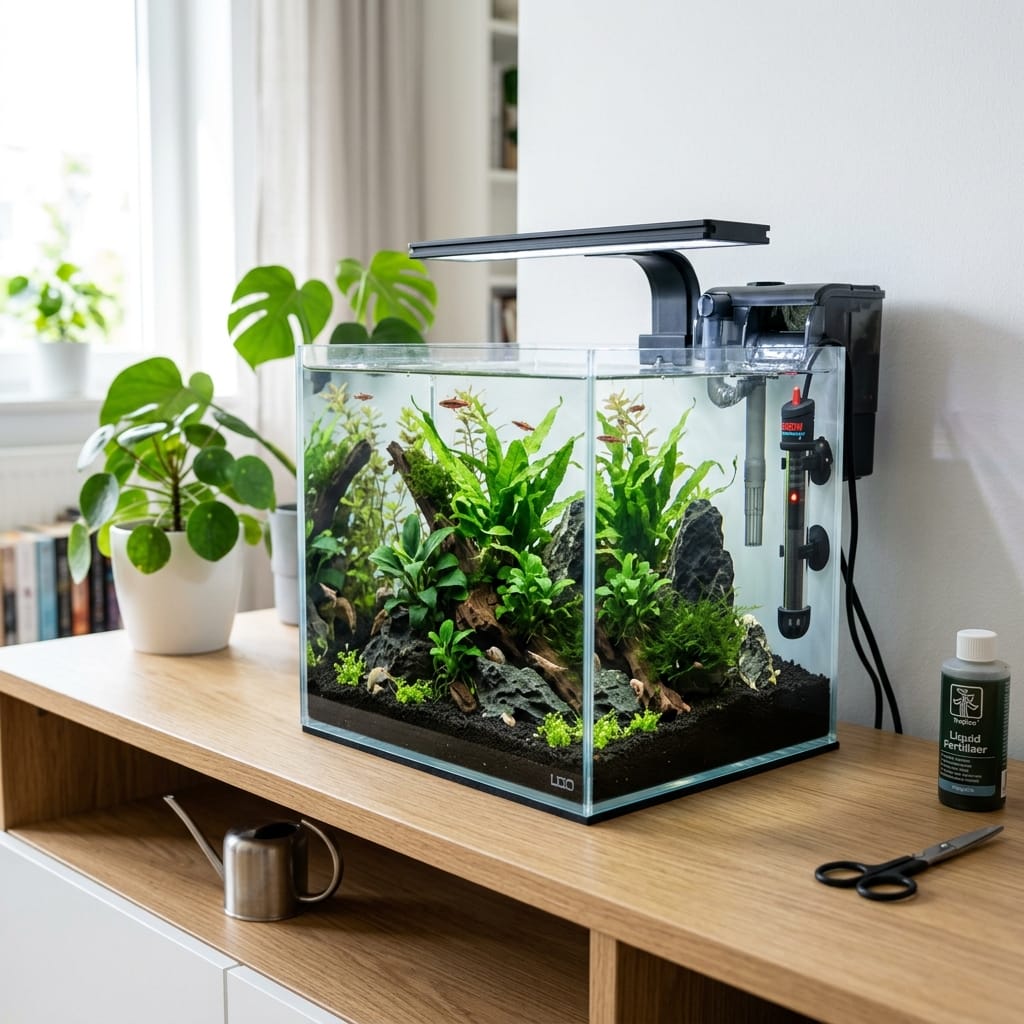
One of the most common questions beginners ask when entering the hobby is: “how to maintain aquarium” environments so that fish and shrimp thrive? While nano aquariums (tanks under 10 gallons) are incredibly beautiful, their small water volume means parameters can fluctuate quickly.
In this guide, we will cover exactly how to take care of aquarium fish in a small setup by choosing the right equipment and establishing a simple maintenance routine.
1. Essential Aquarium Equipment
To keep your water crystal clear and your livestock healthy, you need to invest in a few basic pieces of hardware.
The Fish Aquarium Water Filter
A high-quality fish aquarium water filter is the heart of your tank. It provides mechanical filtration (removing floating debris) and, more importantly, biological filtration (housing beneficial bacteria that consume toxic ammonia). For a nano tank, a small sponge filter or a hang-on-back aquarium filter pump is ideal. If you are keeping baby dwarf shrimp, ensure the filter intake is covered with a fine sponge to prevent them from being sucked in.
Temperature Control: The Aquarium Heater
Tropical fish and shrimp require stable water temperatures, typically between 22°C and 26°C. An aquarium heater (or fish tank heater) with a built-in thermostat is crucial, especially during cold winter nights. Rapid temperature drops can stress fish, leading to diseases like Ich.
Aeration
While a good filter will agitate the water surface enough to provide oxygen, some densely stocked tanks benefit from a fish tank air pump. Air pumps drive sponge filters and create bubbles that increase the dissolved oxygen in the water, which is highly beneficial during hot Indian summers when oxygen levels naturally drop.
2. Aquascaping and Plant Care
A beautiful tank isn’t just about the fish; it’s about the environment you create for them.
Aquarium Plant Fertilizer
If you are growing aquatic plants like Monte Carlo or Java Fern, you will need to provide nutrients. Using a high-quality liquid aquarium plant fertilizer ensures your plants have the iron, potassium, and micro-nutrients they need to grow lush and green, which in turn helps naturally filter the water.
Hardscape and Decor
When choosing aquarium decoration items, try to stick to natural materials like Dragon Stone, Seiryu Stone, or Spider Wood. Avoid cheap plastics or paints that can degrade and leach toxins into the water over time.
(Bonus tip for plant lovers: If you love greenery, you can even use the nutrient-rich water you remove during water changes to water your small indoor plant pots! It’s an excellent, free, natural fertilizer for your terrestrial small plant pots).
3. The Weekly Maintenance Routine
Maintaining a nano tank doesn’t have to be a daily chore. Follow this simple weekly routine to keep your tank pristine:
- Test the Water: Check Ammonia, Nitrite, and Nitrate levels.
- Clean the Glass: Use a magnetic scraper or an algae sponge to clean the viewing panes. (Alternatively, add a Nerite Snail to do this for you!)
- Water Change: Remove 15% to 20% of the water using a siphon, vacuuming any detritus from the substrate.
- Refill with Treated Water: Always use a water conditioner to remove chlorine and chloramines from your tap water before adding it to the tank.
By equipping your tank with a reliable aquarium heater and aquarium filter pump, and sticking to a consistent weekly water change schedule, you will master exactly how to take care of aquarium fish and enjoy a thriving underwater ecosystem for years to come!